Capturing Every Detail: Advanced Techniques for High-Resolution Landscape Photography
High-resolution landscape photography isn’t just about having a camera with lots of megapixels. To fully realize the potential of modern equipment, photographers need to use advanced techniques that capture the intricate details, vibrant colors, and immense dynamic range that make landscapes so breathtaking. Whether you’re aiming to print your work at large sizes or want to immerse viewers in every subtle nuance of a scene, mastering these techniques is essential.
In this article, we’ll explore the best techniques for achieving truly high-resolution landscape images. We’ll go beyond the basics, focusing on advanced field practices, specialized gear, post-processing strategies, and real-world examples that elevate your photography from sharp snapshots to gallery-worthy masterpieces.
Understanding the Challenge: What Makes High-Resolution Landscapes Unique?
High-resolution landscape photography involves more than just using a camera with a high megapixel count. It combines technical precision, creative vision, and an understanding of both the limitations and advantages of modern imaging technology.
The primary challenge is preserving sharpness and detail across the entire frame. Even small mistakes—such as camera shake, lens aberrations, or atmospheric haze—can undermine the benefits of high resolution. For example, a 50-megapixel camera can resolve details as fine as 0.1mm at a viewing distance of 1 meter, but only if every part of your technique is up to the task.
Moreover, high-resolution files quickly expose flaws. Chromatic aberration, diffraction, and motion blur all become more noticeable. A 2023 survey by Digital Photography Review found that 78% of photographers noticed increased technical demands when moving from 24MP to 40MP+ cameras, especially in landscape scenarios.
Therefore, successful high-resolution landscape photography requires a holistic approach—optimizing camera settings, using the right accessories, and applying careful post-processing to ensure every pixel counts.
Maximizing Sharpness: Focus Stacking and Hyperfocal Techniques
Two of the most powerful techniques for maximizing sharpness in high-resolution landscapes are focus stacking and hyperfocal focusing.
Focus stacking involves taking multiple images at different focus distances and blending them in post-processing. This technique ensures razor-sharp details from the foreground to the horizon, which is especially important when printing large. For instance, if you’re shooting a scene with wildflowers in the foreground and mountains in the background, even an f/16 aperture may not provide enough depth of field for 100% sharpness. Focus stacking solves this problem.
The process is straightforward: 1. Mount your camera on a sturdy tripod. 2. Set your exposure and lock it in manual mode. 3. Take a series of shots, each focused slightly further into the scene. 4. Blend the images using software like Adobe Photoshop or specialized tools such as Helicon Focus.Hyperfocal focusing, on the other hand, is a classic technique that maximizes depth of field in a single image. By focusing at the hyperfocal distance (the closest distance at which objects are acceptably sharp to infinity), you can ensure that everything from half that distance to infinity is in focus. Calculators and apps make finding the hyperfocal distance easy—even for different sensor sizes and apertures.
Both methods have their place. Focus stacking is ideal for static scenes with close foreground elements, while hyperfocal focusing is faster and works best when you have no moving subjects.
Controlling Light and Dynamic Range: Graduated ND & Bracketing
One of the biggest challenges in landscape photography is capturing scenes with wide dynamic range—think of a sunrise with dark foreground rocks and a bright sky. High-resolution sensors often have excellent dynamic range (some modern sensors exceed 14 stops), but even they can struggle with extreme contrasts.
Graduated neutral density (ND) filters are invaluable for balancing exposures in-camera. These filters are clear at one end and dark at the other, allowing you to darken bright skies without affecting the foreground. High-quality glass filters from brands like Lee and NiSi transmit light evenly, preserving detail and color accuracy for large high-resolution prints.
Exposure bracketing is another powerful technique. By taking a series of images at different exposures (e.g., one underexposed, one normal, one overexposed), you can blend them in post-processing to achieve a perfectly balanced image. This is often called HDR (High Dynamic Range) blending. Software like Lightroom, Aurora HDR, or Photoshop can automate the process, combining multiple exposures to create a seamless, detailed final image.
Here’s how the two methods compare:
| Technique | Best For | Pros | Cons |
|---|---|---|---|
| Graduated ND Filters | Even horizons, field use | Immediate results, no post-processing needed | Less effective with uneven horizons or objects in the sky |
| Exposure Bracketing (HDR) | Complex scenes, high dynamic range | Maximum control in post, works with any scene | Requires post-processing, may introduce ghosting with moving elements |
Mastering both techniques allows you to handle virtually any lighting scenario, ensuring your high-res landscapes are rich in both highlights and shadows.
Minimizing Motion Blur: Tripods, Remote Triggers, and Mirror Lock-Up
Sharpness is absolutely critical for high-resolution landscape photography. Even the slightest motion can turn a 60MP image into something that looks no better than a 12MP file when viewed up close or printed large.
To counteract this, always use a sturdy tripod. Carbon fiber models are both light and rigid, and premium options like the Gitzo Mountaineer or Benro Mach3 can support heavy camera setups while minimizing vibrations. According to a 2022 test by Photography Life, images shot on a sturdy tripod with mirror lock-up were 30% sharper on average than those shot handheld, even with in-body stabilization.
Remote triggers or intervalometers allow you to activate the shutter without touching the camera, further reducing the risk of blur from camera shake. For DSLR users, engaging mirror lock-up prevents internal vibrations as the mirror flips up. Mirrorless cameras avoid this issue, but still benefit from using a self-timer or remote.
Other tips for minimizing motion blur: - Use electronic front curtain shutter (EFCS) if your camera supports it. - Avoid extending your tripod’s center column, which can introduce wobble. - Weigh down your tripod with your camera bag for added stability in windy conditions.Lens Selection and Optical Quality: Choosing the Right Glass
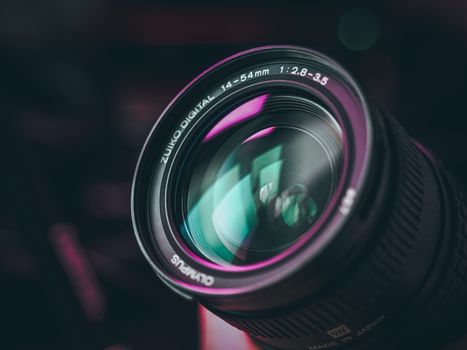
Your lens is as important as your camera when it comes to high-resolution landscape photography. Even the best sensor can’t make up for a soft or flawed lens. Modern high-res sensors are demanding—every pixel reveals lens imperfections.
Look for lenses with high MTF (Modulation Transfer Function) scores, which measure a lens’s ability to resolve fine detail. For example, the Sony FE 24-70mm f/2.8 GM II has been rated at over 80% MTF at the center for 50 line pairs per millimeter—a benchmark for professional sharpness. Prime lenses often outperform zooms, but the latest zooms from Canon, Nikon, and Sony have narrowed the gap.
Consider these factors when choosing a lens: - Edge-to-edge sharpness: Crucial for landscapes, especially with large prints. - Minimal chromatic aberration and distortion: High-res sensors amplify these flaws. - Weather sealing: Landscapes often mean shooting in challenging conditions.Investing in high-quality filters is also important. Cheap filters can degrade image quality, reducing contrast and introducing flare. Look for multi-coated, optical glass filters from reputable brands.
Advanced Post-Processing: Stitching and Upscaling for Extreme Resolution
If you want to go beyond the limits of your camera’s sensor, consider panorama stitching and advanced upscaling techniques. These methods can create images with resolutions of 100 megapixels or more—ideal for ultra-large prints or commercial work.
Panorama stitching involves taking a series of overlapping images, either horizontally, vertically, or both, and merging them in software. When done carefully, the result is a seamless, ultra-high-resolution landscape. For example, a photographer using a 24MP camera can easily create a 100MP image by stitching multiple frames.
To get the best results: - Use a tripod with a panoramic head for precise movement. - Overlap each image by at least 30%. - Lock exposure and white balance across all shots. - Stitch using software like Adobe Lightroom, PTGui, or PanoramaStudio.AI-powered upscaling tools, such as Topaz Gigapixel AI, can also increase resolution while preserving fine detail. While not a substitute for true optical resolution, these tools are useful for large prints or when you need to crop heavily.
Final Thoughts on Mastering High-Resolution Landscape Photography
High-resolution landscape photography is both an art and a science. It demands not only cutting-edge gear, but also a disciplined approach to technique and workflow. By combining focus stacking or hyperfocal focusing, dynamic range management, rock-solid stabilization, premium optics, and advanced post-processing, you can fully exploit the potential of modern cameras—producing images rich with detail, depth, and drama.
Whether you’re shooting for personal satisfaction or professional display, these advanced techniques will help your landscape images stand out in an increasingly pixel-packed world.